


After a successful initial deployment of an AI-enhanced ABM program, Hempel saw the need to scale it across regional and product teams. To ensure alignment, brand consistency, and content quality, it established a proprietary marketing intelligence platform that both people and AI agents can leverage.
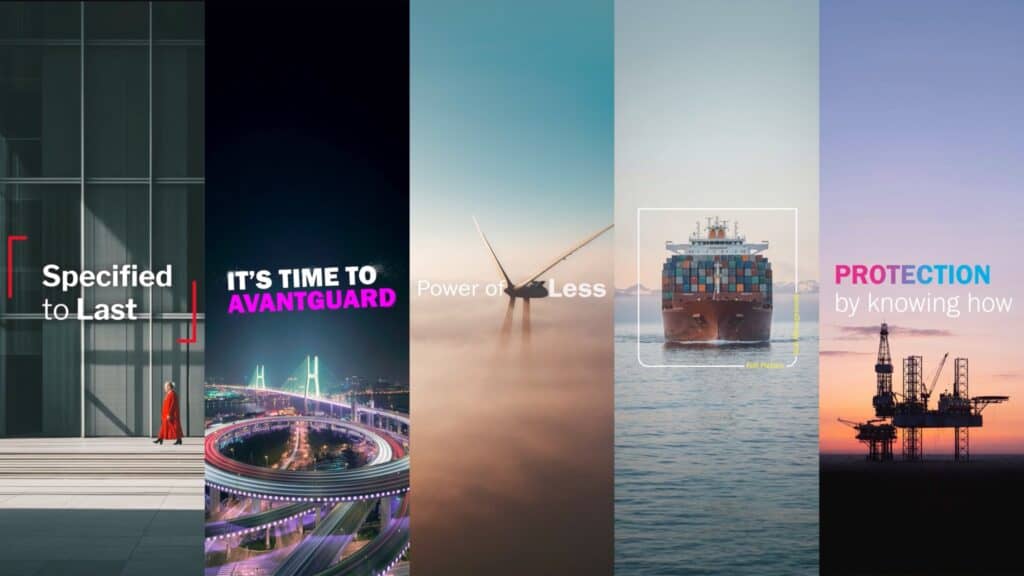
STRATEGY. In 2024, Hempel won silver at the Danish Digital Awards for Specified to Last - an insight-driven ABM program targeting specifiers in the Middle East that delivered 17% volume growth and opened new market segments. The success drove internal demand that risked becoming a bottleneck.
Regional and product teams across Marine, Energy, Infrastructure, and Decorative all wanted the same quality of insight-driven marketing for their own markets. Some wanted competitive analyses, others wanted localised campaigns.
If each request was fulfilled individually, resource needs would multiply tenfold. Worse, most incoming requests deviated from Hempel's core marketing strategy in subtle but meaningful ways. Different teams had different interpretations of positioning, different assumptions about audiences, different ideas about what the end result should look like.
Hempel's marketing leadership recognised this as a preview of a much bigger problem: AI was about to make it easy for every team to produce campaigns, analyses, and content at speed. But without a shared foundation, speed would just amplify inconsistency. More output, but without alignment. That is not scale. That is chaos. Picture dozens of teams across the globe, each deploying AI agents based on their own interpretation of the brand and commercial direction. The result would not be a 10x leap in output. It would be AI-generated slop - misaligned messaging amplified at machine speed.
Rather than racing to deploy AI tools and chasing quick wins, Hempel made the harder, less visible choice: to build the strategic foundation first, structure the knowledge, and codify the business. They didn't have a complete playbook - no one does.
"Throughout this process, the focus has been on defining marketing's role in a world where the analysis and content previously created manually can now be delivered faster - and in many cases better - with AI." Rasmus Vestergaard, Head of Marketing Communications, Hempel
This is the decision that separates the Hempel AI Hub from the wave of AI implementations that often start and end with prompt engineering.
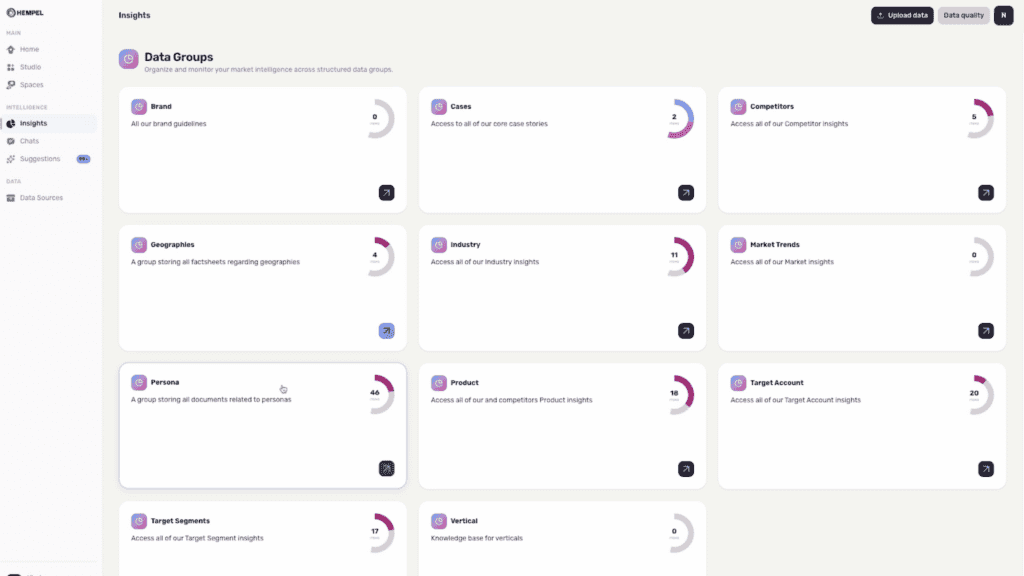
The Hempel AI Hub ingests reports, presentations, campaign performance data, technical briefs, and commercial documents accumulated over decades - and distils it into structured marketing intelligence that both people and AI agents can act on. Regional and product teams generate competitive analyses, produce multi-channel content, and deploy localised campaigns - all grounded in the same strategic truth.
The architecture has two layers, and their order matters.
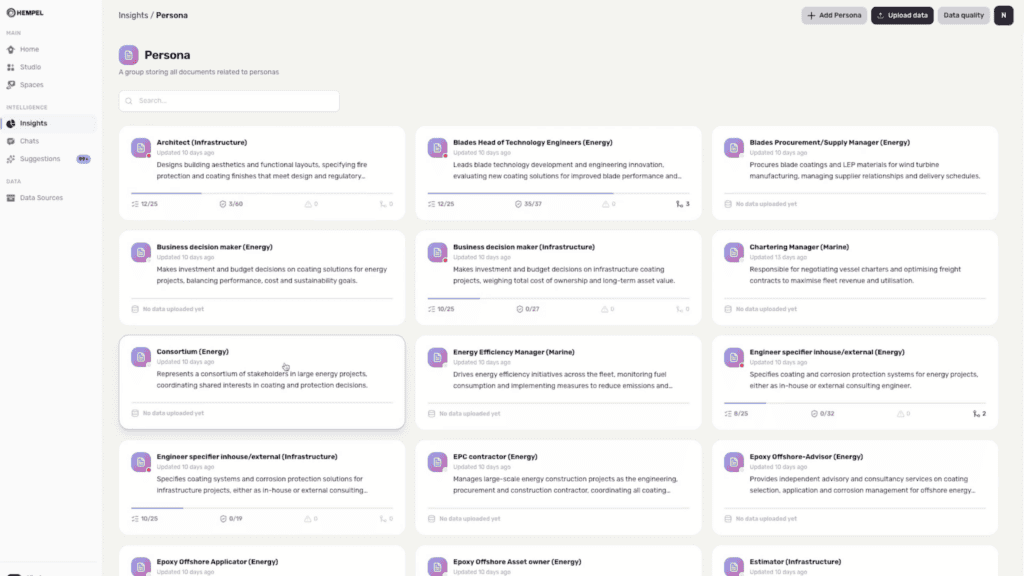
First, the strategic knowledge layer. Hempel structured and centralised decades of marketing intelligence into a governed, machine-readable knowledge base, in partnership with its technical AI partner BirdieStudio. The data goes through a deliberate process of validation, alignment, and quality control across marketing, product, and commercial teams, with a human in the loop. Persona profiles. Competitor positioning. Technical product data. Regional market dynamics. Campaign playbooks and brand guidelines. All organised so that autonomous agents can query it, cross-reference it, and flag conflicts across datasets.
The platform runs on fine-tuned open-weight models adapted to Hempel's domain using LoRA and QLoRA, preserving general capability while embedding industry-specific knowledge. Each model is evaluated through automated metrics, frontier-model-as-judge assessments, and blind human reviews by domain specialists, with feedback incorporated via reinforcement learning from human feedback (RLHF). Foundation models and configurations are continuously tested, creating a cycle where every evaluation improves the next version.
The platform is designed as a living system - one that continuously absorbs new signals and reflects changes across active programs. Industry developments feeding into competitive positioning. Persona profiles evolving based on actual buyer behaviour. Sales teams receiving real-time prompts during customer meetings, with insights validated and returned to the knowledge base. The first use cases are live. A knowledge base that learns is a knowledge base that compounds.
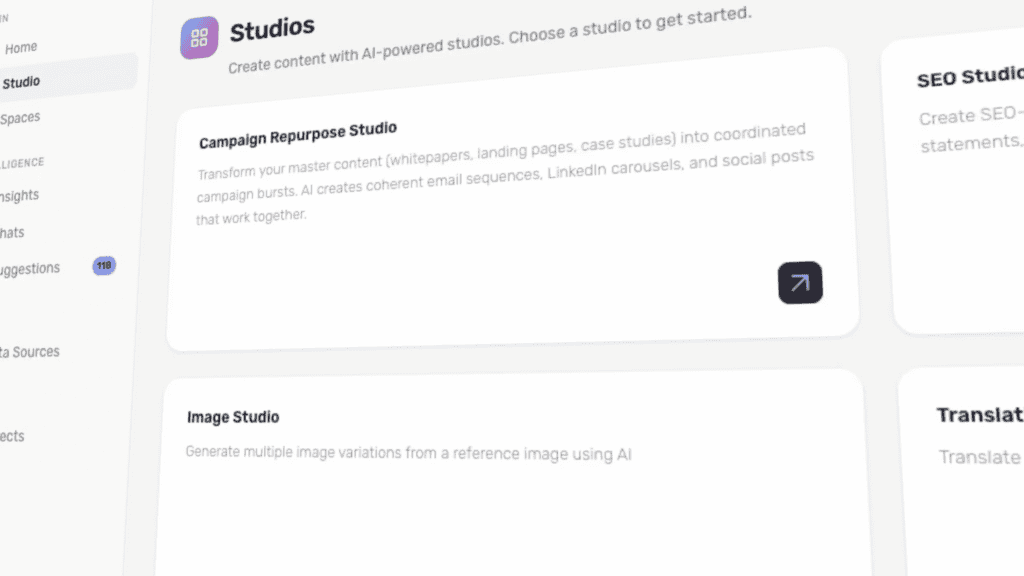
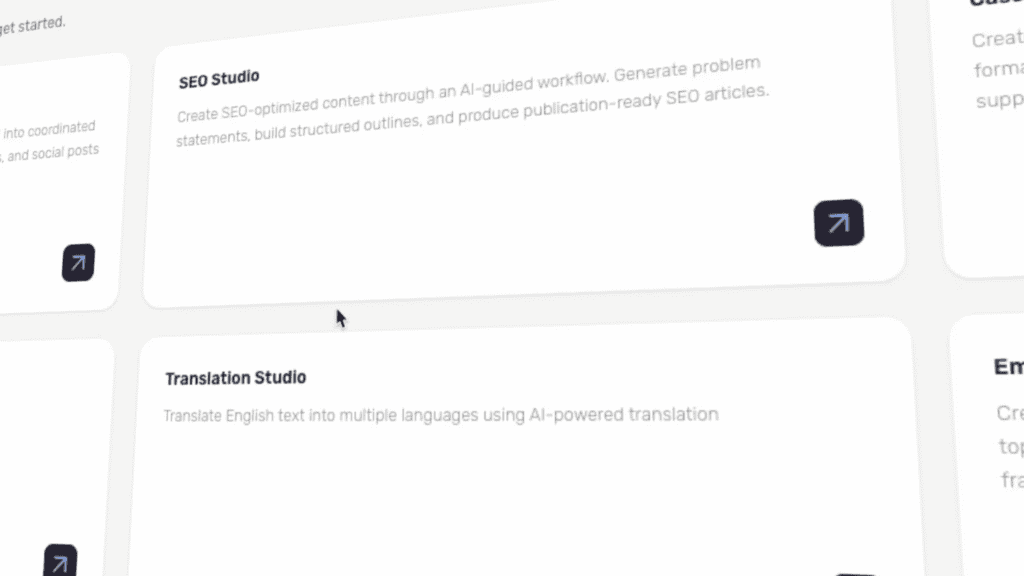
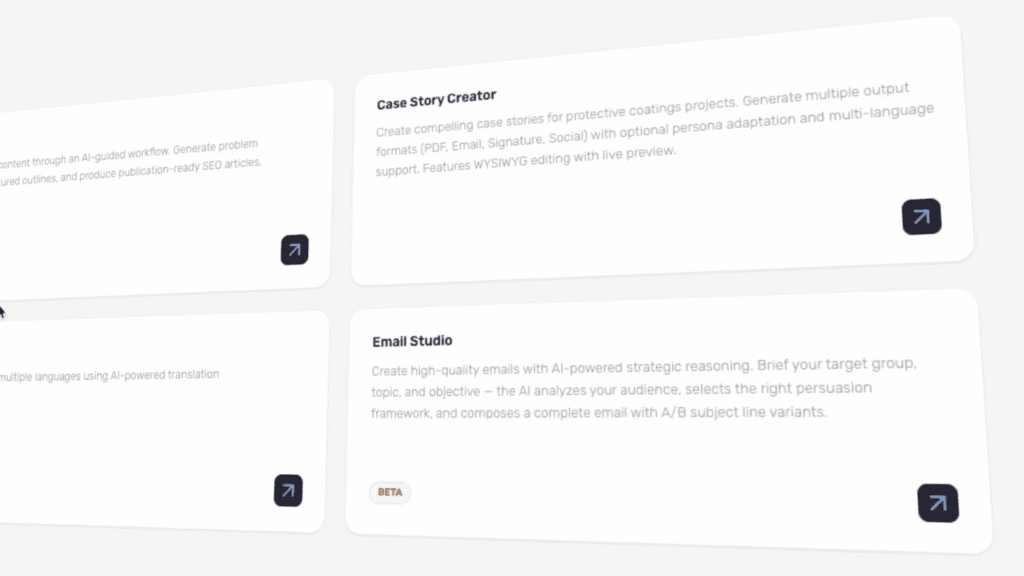
Then: specialised AI agents that execute on top of that foundation. Autonomous agents generate competitive positioning reports and SWOT analyses grounded in Hempel's verified market data, output directly into branded templates. A content repurposing and SEO engine takes a single technical whitepaper and produces a full ecosystem of channel assets - social posts, email sequences, SEO content - all mapped to validated persona profiles. A translation engine maintains technical accuracy across languages, currently live on Hempel's eBusiness platform.
The platform is now in its second rollout phase. Every agent runs within the same strategic guardrails. A team in Singapore, a team in Houston, and a team in Copenhagen all draw from the same source of truth.
Execution efficiency - more programs, same quality as assessed by a human-in-the-loop, zero additional headcount. The AI Hub has enabled Hempel to respond to demand from regional and product teams - not by producing more content, but by ensuring every new program launches at the same strategic quality as the original. Localised campaigns, competitive analyses, and multi-channel assets that previously required months of agency briefing cycles now deliver in weeks. A 300% increase in output capacity across segments and markets, without adding headcount.
Commercial proof - the first full-scale deployment. A digital marketing initiative targeting consulting engineers and steel fabricators across global markets. A two-year program of this scope - 3 regions, 20 markets and audiences, executed simultaneously - would not have been feasible without the Hub. €130,000 in media investment contributed to €5M in documented incremental revenue - a 38x return. 17% volume growth year-on-year, roughly three times the market growth rate of approximately 3%. In the Middle East, where the program was most concentrated, volume surged 49.5%.
Organisational adoption - from pilot to operating system. Regional teams already move faster without the central team losing control. That balance is what makes this scalable.
A compounding asset. Every campaign executed, analysis generated, market entry completed adds to the knowledge base. The platform becomes more capable the more it is used.
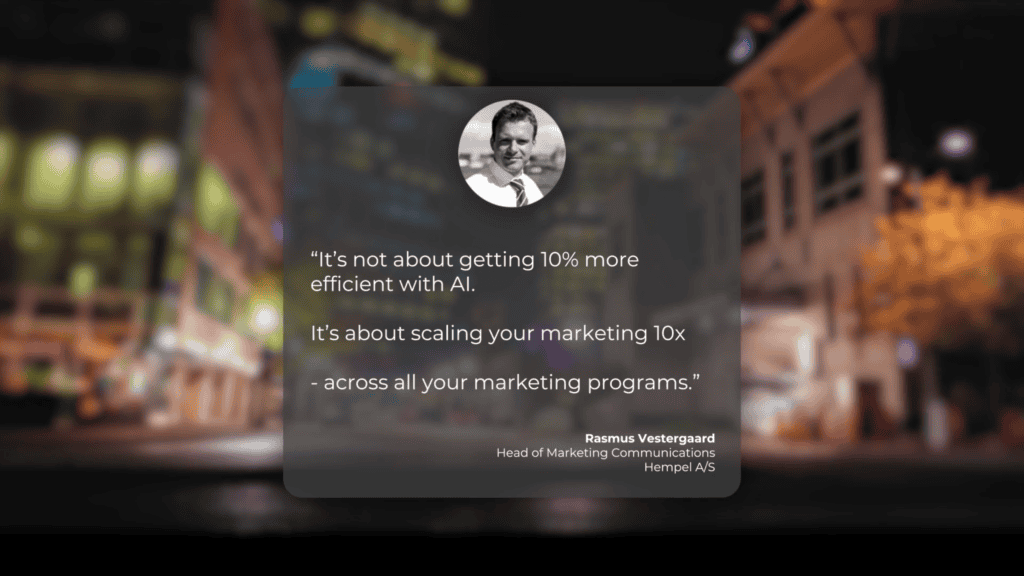
“It’s not about becoming more efficient with AI. It’s about scaling marketing with stronger relevance, built on better customer insight, across every program.” -Rasmus Vestergaard, Hempel
Hempel implemented AI as a tool. But the most important result has been an early understanding of how this changes the way marketing works. Roles, routines, and collaboration are being redefined. Not on top of existing processes, but through new ones. New ways of working.
Hempel is only getting started. Building with AI through testing and learning together.